Frances links to what she very nicely describes as an example of real reporting. Frances praises the article as an effort 'to evaluate the truth of the administration's claims'. I couldn't agree more with the praise, but I think I might describe it a bit differently. And, I'd do so in a way that Paul would find amusing (note: Paul is the first of the TG comments, but his particular comment is quoted by the second TG comment - yes folks, they are different people, but they are a bit difficult to tell apart), by turning again to discourse.
To get to the point: it's a great article not only because it critically evaluates the claims the administration makes (rather than merely doing the ridiculous 'he said, she said' bullshit), but also because it steps back from the individual comments of members of the administration to see what kind of discourse they are trying to form, what kind of narrative they are very self-consciously seeking to construct. When reporters merely focus in on the specific fact (and then say it's affirmed on one side and denied on the other) they actually contribute to the administration's attempt to get the narrative out there - and they do so no matter the truth or falsity of the particular statement. It's the broader discourse that matters most.
Take WMD, for example. In the run-up to the Iraq war, each time a reporter would focus on WMD as the reason for going to war, they would actually reify the causal logic (i.e. must invade Iraq because they have WMD), even if they 'objectively' also reported on the 'opposing view' that there were no WMD. Put otherwise, all of this press about WMD (no matter its content) meant that the frame, the discourse, was always going to be WMD - and not 'a war for oil', not the 'neocon vision of the middle east', not 'the liberation of oppressed people's, not 'the march of democracy', not any other discourse.
But the article Frances links to steps back a bit from the particular claim about the importance of bombing the Samarra shrine. This lets it evaluate the truth of that claim, yes, but it also lets it show how the claim itself is a part of a broader discourse that the administration is trying to construct. In this discourse 2006 was a turning point (downward) but only because of a few anomalies, and we can correct those anomalies with a 'surge' (or whatever the hell we're supposed to call it).
My specific point: the more the Bushies can get this discourse out there, the less they'll have to deal with alternative discourses, e.g. those in which 2006 was not an anomaly but part and parcel of an utter failure of vision, coupled with complete incompetence of execution.
My general point: the Bush administration has consistently proved itself ingenius in using its ability to control the message it puts out (e.g. with press secretaries who never say anything, by flooding the Sunday talk shows, but insisting on 'talking points' up and down the party ranks and throughout much of the 'press') in order to help it consciously construct its discourses. Hence, the MSM has been a (silent or not) accomplice in this process, because they never step back and connect the dots. Hence, also, the genius of Jon Stewart, who does just this sort of dot-connecting on a regular basis (and also compares previous discourses with the current one 'greeted as liberators', 'can't imagine the occupation would cost more than the liberation', etc. in order to expose them) simply by showing lots of clips.
15 January 2007


12 January 2007
He's Coming to America
I wonder if this is front page news over in the States, the way that it is here? I bet not.
David Beckham has signed a contract with the LA Galaxy (of MLS fame), making him the highest-paid footballer in the world, and the highest-paid sports figure in the US. I also wonder how the story will be covered elsewhere. Here, the framing for the piece is straightforward. For example:
I can't help but be reminded of the stories when Wayne Gretzsky left the home of hockey in Canada to go to LA. The analogy has its limits since Gretzsky was still playing NHL hockey, and no football fan in Europe is going to consider the MLS a 'real league'. Still, Gretzsky surprised people (his hat trick in game 7 of the seminfinals, against Toronto ('93 I thnk), might have been his best single-game performance), and I wonder if Beckham might not do so as well.
David Beckham has signed a contract with the LA Galaxy (of MLS fame), making him the highest-paid footballer in the world, and the highest-paid sports figure in the US. I also wonder how the story will be covered elsewhere. Here, the framing for the piece is straightforward. For example:
the move signals the end of his career as a footballer of significanceThis will be the repeated them: Beckham is done, his career is over - no chance to make it back onto the England squad, no chance to have any real impact. Of course, it's easy to tell the story this way, because it fits with the narrative already in place. Nothing is more popular in Britain than bashing on Beckham, both in terms of his celebrity status but also in terms of his presumed lack of ability on the pitch. I'm still very ignorant about football, but I actually thought Beckham was the most valuable player for England during the World Cup. I don't think he was England's best player, but his set-up abilities seemed to provide something to the team that no one eslse had - and he clearly had an impact on the games.
I can't help but be reminded of the stories when Wayne Gretzsky left the home of hockey in Canada to go to LA. The analogy has its limits since Gretzsky was still playing NHL hockey, and no football fan in Europe is going to consider the MLS a 'real league'. Still, Gretzsky surprised people (his hat trick in game 7 of the seminfinals, against Toronto ('93 I thnk), might have been his best single-game performance), and I wonder if Beckham might not do so as well.
10 January 2007
Puzzling
Greg links to another one of those tests that tries to place you on their version of the political map.
I find these questionairres puzzling because they rely so heavily upon completely charged, partial, and partisan statements. More importantly, these statements are taken from broader sets of political, ideological, and social discourses, and, so far as I can tell, the question is often trying hardest to see whether you recognise and are comfortable with that discourse. That is, they aren't actually asking you to reject or accept putative statements of fact or truth - even though this is the form the actual questions take. Instead, they are checking to see whether the statement resonates with you.
But the difference between these two modes of discourse (truth and resonance) creates some dilemmas. Thus, what to make of this question?
You see, I count myself as something of a radical democrat; in almost every case, I'll favour democracy. But faced with answering whether the above statement is true or not, what do I do? Because,...well, yes, 'I agree' (I even strongly agree) that the above statement is true: a one party state does get things done. I'm not a big fan o the things it 'gets done', but it certainly gets them done.
If the question were: do you favour the liberty afforded by radical, particapatory democracy over the efficient decision-making of more authoritarian forms of government, then I can easily answer in a way that probably tells them what they want to know. But they don't want to ask questions like that.
Now, what does this tell us about the current state of society, politics, etc.? I haven't figured that one out yet. But the fact that they aren't really asking you direction questions but instead trying to tap into discourses in this way....I think that might be significant.
I find these questionairres puzzling because they rely so heavily upon completely charged, partial, and partisan statements. More importantly, these statements are taken from broader sets of political, ideological, and social discourses, and, so far as I can tell, the question is often trying hardest to see whether you recognise and are comfortable with that discourse. That is, they aren't actually asking you to reject or accept putative statements of fact or truth - even though this is the form the actual questions take. Instead, they are checking to see whether the statement resonates with you.
But the difference between these two modes of discourse (truth and resonance) creates some dilemmas. Thus, what to make of this question?
A significant advantage of a one-party state is that it avoids all the arguments that delay progress in a democratic political system.
You see, I count myself as something of a radical democrat; in almost every case, I'll favour democracy. But faced with answering whether the above statement is true or not, what do I do? Because,...well, yes, 'I agree' (I even strongly agree) that the above statement is true: a one party state does get things done. I'm not a big fan o the things it 'gets done', but it certainly gets them done.
If the question were: do you favour the liberty afforded by radical, particapatory democracy over the efficient decision-making of more authoritarian forms of government, then I can easily answer in a way that probably tells them what they want to know. But they don't want to ask questions like that.
Now, what does this tell us about the current state of society, politics, etc.? I haven't figured that one out yet. But the fact that they aren't really asking you direction questions but instead trying to tap into discourses in this way....I think that might be significant.
06 January 2007
Me and CNN, Again.
I see no way to justify my morbid fascination with cnn.com and its continually declining 'standards' for both reporting and the use of the English language. I can explain it as my one remaining effort to keep in touch with what's being presented as 'news' by the MSM in the US (these days I only read BBC, The Guardian, and FFB, of course).
This morning I noticed cnn.com's new 'feature'. It's called 'Story Highlights' and consists of 3 or 4 bullet points in a box at the top of each story. The idea seems to be that CNN's lengthy, in-depth, and highly sophisticated articles are just too much for the average reader to be able to handle, so we need the bullet points to help us out - or, more likely, to substitute for actually reading the article.
But here's the thing: the articles are ridiculously short to begin with! Check this one out, for example: the story of two planes almost colliding in Denver. The entire article is 182 words long. Even reading very verly slowly, it still takes well under a minute to read the whole article.
By the way, as a side note that's probably much more substantive than my above rant: both the Guardian and CNN's international edition have 'Bush reshuffles Generals in Iraq' as a headline this morning. But if you switch to the CNN US edition, you can't find such a headline; nor was there anything like that on the NY Times website. Weird? Definitely. Significant and meaningful? You tell me.
This morning I noticed cnn.com's new 'feature'. It's called 'Story Highlights' and consists of 3 or 4 bullet points in a box at the top of each story. The idea seems to be that CNN's lengthy, in-depth, and highly sophisticated articles are just too much for the average reader to be able to handle, so we need the bullet points to help us out - or, more likely, to substitute for actually reading the article.
But here's the thing: the articles are ridiculously short to begin with! Check this one out, for example: the story of two planes almost colliding in Denver. The entire article is 182 words long. Even reading very verly slowly, it still takes well under a minute to read the whole article.
By the way, as a side note that's probably much more substantive than my above rant: both the Guardian and CNN's international edition have 'Bush reshuffles Generals in Iraq' as a headline this morning. But if you switch to the CNN US edition, you can't find such a headline; nor was there anything like that on the NY Times website. Weird? Definitely. Significant and meaningful? You tell me.
04 January 2007
OK, fine. We're using the silver!
The story of our nomadism continues, though I hope this somewhat traumatic chapter will be the final one (with no need for any sort of epilogue).
As you'll recall from chapter 6, almost immediately after storing almost all our worldy possessions inside a tin box in the desert of California, said 'storage unit' was broken into (we still think it might have been an inside job). Given that we were thousands of miles away in the valleys of central Pennsylvani, we had to assess the damage with only the aid of a blurry polaroid taken of the front of the unit. We surmised that the thieves had taken almost all the valuable items: all our tools; all our speakers, television and audio/video equipment; all our CDs; my golf clubs; and a few other big ticket items. We filed an insurance claim based on these presumptions and were very pleased when they wrote us a check (for a quite distinct outcome, see chapter 3 in which the movers destroy most of our stuff and fail to issue a fair reimbursement). And then, we tried to put the disturbance of the break-in behind us.
Zip forward more than 2 and 1/2 years to this Tuesday, when our remaining belongings from storage - after numerous items had been sold or given away, thanks to coordination by Steve and Kim on the ground in CA - arrived at our house. Our books, key pieces of furniture, our beloved rugs, all here safe and sound! However, only two of the expected 4 kitchen boxes showed up. And sure enough, we are missing: all our knives, given to us over the course of 5 years by my parents; all of our coffee mugs, a collection dating back to college; all of our good silverware, given to us by Rebecca's mom long ago; all of our good pots and pans, given to Rebecca by me the xmas before storing them; and a whole lot of other things that we can't even remember.
Ironically, while the thieves took things like our silverware and our mugs that are of worth only to us, they left us with the (almost) full set of 1936 Pennsylvania silver, including its gorgeous felt-lined mohagony box (also a lovely gift from Rebecca's mom). This, of course, would have been very pawn-able, and not something we were likely to need on a day-to-day basis.
But we're taking it as a sign, and we refuse to continue using the 'camping' utensils that we've suffered for the past 2 years. So to hell with it: we're using the silver! Any guests to our houehold can therefore expect fine dining utensils.
They can also expect 'parting gifts': we have almost a dozen very small US appliances (mostly desk lamps) that won't do us much good connected to 230v. So come visit us and take one home!
As you'll recall from chapter 6, almost immediately after storing almost all our worldy possessions inside a tin box in the desert of California, said 'storage unit' was broken into (we still think it might have been an inside job). Given that we were thousands of miles away in the valleys of central Pennsylvani, we had to assess the damage with only the aid of a blurry polaroid taken of the front of the unit. We surmised that the thieves had taken almost all the valuable items: all our tools; all our speakers, television and audio/video equipment; all our CDs; my golf clubs; and a few other big ticket items. We filed an insurance claim based on these presumptions and were very pleased when they wrote us a check (for a quite distinct outcome, see chapter 3 in which the movers destroy most of our stuff and fail to issue a fair reimbursement). And then, we tried to put the disturbance of the break-in behind us.
Zip forward more than 2 and 1/2 years to this Tuesday, when our remaining belongings from storage - after numerous items had been sold or given away, thanks to coordination by Steve and Kim on the ground in CA - arrived at our house. Our books, key pieces of furniture, our beloved rugs, all here safe and sound! However, only two of the expected 4 kitchen boxes showed up. And sure enough, we are missing: all our knives, given to us over the course of 5 years by my parents; all of our coffee mugs, a collection dating back to college; all of our good silverware, given to us by Rebecca's mom long ago; all of our good pots and pans, given to Rebecca by me the xmas before storing them; and a whole lot of other things that we can't even remember.
Ironically, while the thieves took things like our silverware and our mugs that are of worth only to us, they left us with the (almost) full set of 1936 Pennsylvania silver, including its gorgeous felt-lined mohagony box (also a lovely gift from Rebecca's mom). This, of course, would have been very pawn-able, and not something we were likely to need on a day-to-day basis.
But we're taking it as a sign, and we refuse to continue using the 'camping' utensils that we've suffered for the past 2 years. So to hell with it: we're using the silver! Any guests to our houehold can therefore expect fine dining utensils.
They can also expect 'parting gifts': we have almost a dozen very small US appliances (mostly desk lamps) that won't do us much good connected to 230v. So come visit us and take one home!
31 December 2006
it's a wonder I can think at all
for Christmas Sam got me a Nikon camera (love to take a pho-o-tograph) and as a result Paul and Art have been in my head for several days. that song is genius. it's about knowledge and seeing. it's about revolutions in perceptions of the world. and its datedness (Kodachrome) is now part of its import. remember when photos could be in colour? (I don't.) How about when HBO and MTV launched? What about your first Apple IIe? BASIC? Pong? electronically mailing friends across campus? it should be used as the kernel of all history/vision/perception lectures, except that none of today's current university students understand or appreciate the joys of the folk harmonising that Paul and Art pulled off. But I'd love to start a lecture with:
What is the connection here, between reading the writing on the wall--clearly a marker of adolescent toilet communication, the space where abstract insults and pick-up lines are traded--and Kodachrome? Is Simon happy about the shiny colours? The greens of summers? How does he communicate his cynicism? What does this tell us about the mood of mid-century popular consciousness? What is lost in the colour? How does nostalgia take shape here? And, why call upon his 'mama'? What kind of threat does she represent?
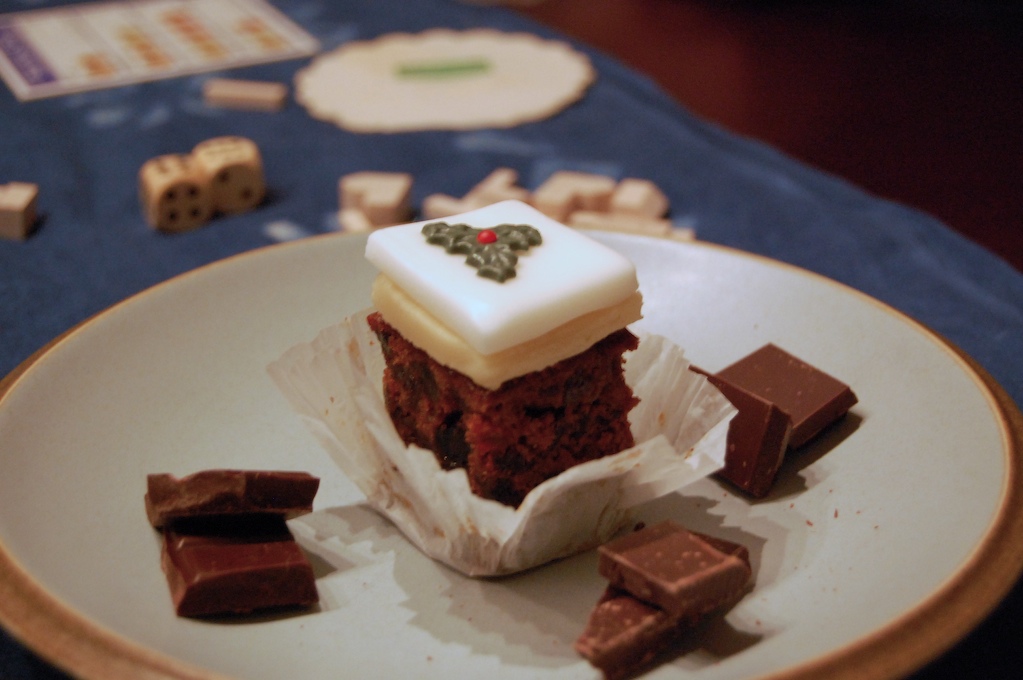
Ah. we can dream. meanwhile, my camera rocks. My portrait of an M&S mini christmas cake, below.

What is the connection here, between reading the writing on the wall--clearly a marker of adolescent toilet communication, the space where abstract insults and pick-up lines are traded--and Kodachrome? Is Simon happy about the shiny colours? The greens of summers? How does he communicate his cynicism? What does this tell us about the mood of mid-century popular consciousness? What is lost in the colour? How does nostalgia take shape here? And, why call upon his 'mama'? What kind of threat does she represent?
Ah. we can dream. meanwhile, my camera rocks. My portrait of an M&S mini christmas cake, below.
29 December 2006
Kate Fox, Watching the English
I just finished reading the above book, which I realise never made it into the blog list at the right but there you are. These things happen. It was recommended by several of our English friends as a good introduction to the behaviour and patterns of those raised in England.
Just to be clear once again, for those who haven't gotten it quite yet: we do not live in England. Wales. Different country, different language, different national history/heritage/pride. So the book was only of limited use for understanding our current surroundings, and indeed one of the interesting things was how much it did differ from our experiences in Wales.
I can highly recommend said text for any anglophile or frequent visitor to England who has observed various stereotypes (queueing, constantly saying 'sorry', self-deprecation) and wondered what was going on. Kate Fox is an anthropologist whose methods (like deliberately bumping into people for an afternoon and counting how many said 'sorry' to her) are as funny as many passages in the book (the English don't like revolutions, and so she articulates their 'protest' chant as: 'What do we want? GRADUAL CHANGE! When do we want it? IN DUE COURSE!' which I find hilarious. well, call-and-response just gets me).
She also details the minutiae of class distinctions, which are quite different from those in the US, needless to say. So it was fascinating. For example: folding your napkin neatly after a meal is considered 'common' as it implies that you might need/want to re-use it. to be properly upper class, you should crumple your napkin messily and leave it whereever. I find this intriguing.
We have also just experienced one of the other measures of class in both the US and the UK: the grocery store. Where you shop is as important as anything else for indicating class. Safeway--King Soopers--Albertsons was the order when we were growing up in suburban Denver, until the wave of organic/whole foods type places added a further upper category. In Minnesota you can go to Byerly's where the floors were carpeted and they hung chandeliers over the produce section. In PA and the NE it's Wegmans. (Blogged about this before here.) Other regions certainly have theirs, I'm sure.
Here in the UK it's Iceland--Lidl--Asda--Tesco--Sainsbury's--Waitrose--whole foods type places: Iceland carries only frozen stuff. hence the name. Asda is Walmart-owned. Say no more. Tesco, where we've been shopping, is more or less the middle class starting point. We just discovered, however, that Sainsbury's now delivers, and so we got our first Sainsbury's order this week. Very exciting. Over-designed packaging, new exotic dips, and generally you pay more for basically the same stuff. We do admit, however, that some of the items are, er, a bit better tasting than the Tesco equivalent. Does that make us elitists? Or are we merely justifying our striving for upper-class status by finding the food better at the one-tick-up store? Of course, if we were truly upper class we wouldn't care--crumpled napkin and all. we also probably wouldn't blog. Sigh. so much for striving.
Just to be clear once again, for those who haven't gotten it quite yet: we do not live in England. Wales. Different country, different language, different national history/heritage/pride. So the book was only of limited use for understanding our current surroundings, and indeed one of the interesting things was how much it did differ from our experiences in Wales.
I can highly recommend said text for any anglophile or frequent visitor to England who has observed various stereotypes (queueing, constantly saying 'sorry', self-deprecation) and wondered what was going on. Kate Fox is an anthropologist whose methods (like deliberately bumping into people for an afternoon and counting how many said 'sorry' to her) are as funny as many passages in the book (the English don't like revolutions, and so she articulates their 'protest' chant as: 'What do we want? GRADUAL CHANGE! When do we want it? IN DUE COURSE!' which I find hilarious. well, call-and-response just gets me).
She also details the minutiae of class distinctions, which are quite different from those in the US, needless to say. So it was fascinating. For example: folding your napkin neatly after a meal is considered 'common' as it implies that you might need/want to re-use it. to be properly upper class, you should crumple your napkin messily and leave it whereever. I find this intriguing.
We have also just experienced one of the other measures of class in both the US and the UK: the grocery store. Where you shop is as important as anything else for indicating class. Safeway--King Soopers--Albertsons was the order when we were growing up in suburban Denver, until the wave of organic/whole foods type places added a further upper category. In Minnesota you can go to Byerly's where the floors were carpeted and they hung chandeliers over the produce section. In PA and the NE it's Wegmans. (Blogged about this before here.) Other regions certainly have theirs, I'm sure.
Here in the UK it's Iceland--Lidl--Asda--Tesco--Sainsbury's--Waitrose--whole foods type places: Iceland carries only frozen stuff. hence the name. Asda is Walmart-owned. Say no more. Tesco, where we've been shopping, is more or less the middle class starting point. We just discovered, however, that Sainsbury's now delivers, and so we got our first Sainsbury's order this week. Very exciting. Over-designed packaging, new exotic dips, and generally you pay more for basically the same stuff. We do admit, however, that some of the items are, er, a bit better tasting than the Tesco equivalent. Does that make us elitists? Or are we merely justifying our striving for upper-class status by finding the food better at the one-tick-up store? Of course, if we were truly upper class we wouldn't care--crumpled napkin and all. we also probably wouldn't blog. Sigh. so much for striving.
24 December 2006
Mae hi'n niwlog!
 indeed. with heathrow socked in by fog (due to lift today, hopefully) and Denver socked in by snow, we are somewhat proud of ourselves for the non-existent foresight that led to our decision to stay in our new house, nest, and relax this Christmas. because we are omniscient and can predict the weather. of course. what are the odds that LHR and DEN would be closed at the same time this year? well, the odds are one.
must make coffee and get in hot tub. happy Christmas eve!
21 December 2006
vielen dank
all my years of language study, slogging through college-level Sturm und Drang literature. all that work. not much fluency, sure. but a line on the ol' cv. and what am I using it for?
Gotta love the liberal arts. Brilliant. Wundervoll.
- viewing Wagner's operatic oeuvre in the original, ohne subtitles?
- reading Der Spiegel in the morning along with the other 8 international newspapers I read?
- discussing the finer points of Goethe's aesthetics?
- quibbling with Kaufmann's translation of Nietzsche?
Gotta love the liberal arts. Brilliant. Wundervoll.
20 December 2006
home
we've been in the new house since September, and it just this past week clicked over into feeling a bit like home. No, we don't have our stuff yet (2nd Jan! very exciting!) and no, it won't wholly feel like home until we have things like matching, high quality silverware, more than one kitchen knife, pictures on the wall, our lovely rugs, and books, books, books.
But it is still starting to feel that way. and it's in a way that reminds me of the way Data of Star Trek TNG describes his understanding of love and friendship:
PS. miss TNG. sigh.
But it is still starting to feel that way. and it's in a way that reminds me of the way Data of Star Trek TNG describes his understanding of love and friendship:
As I experience certain sensory input patterns my mental pathways become accustomed to them. The inputs eventually are anticipated and even missed when absent.this is how it works with home. I know the silhouette of the back of the garden now. the feeling of the bannister, the way the door closes. it's not completely imbued with 'us-ness' yet, but the inputs are beginning to be anticipated. for sure.
PS. miss TNG. sigh.
11 December 2006
Hero worship, or not
I've been reading a one-degree-of-separation blog recently, Frankly Frivolous, which is about all the TV you're watching--the stuff you admit to and the stuff you don't. And, as someone with certain, and admittedly sometimes arbitrary, standards for dialogue/writing/directing that often mean shows get the axe in ep 3 ("Dude. Where are we?" killed Lost for us, sadly), it's nice to be able to keep up with things via someone else's intelligent commentary.
And so I must respond to the Heroes discussion in FF's recent blog post. Don't get me wrong. Heroes is one of our guilty pleasure, fluff TV watches. We find it intriguing--sort of 4400 without the buddy-cop element and without the full 'verse worked out completely. I tend to like the show, although we both could do without Nikki's story-line entirely, thank you very much. If one treats it like a soap and fast-forwards through the bits you're not keen on, it works well.
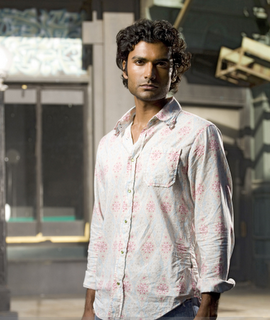 But I have a problem with it, which is the same problem that Alias (also guilty pleasure, also fab, also yummy on many levels) had: Or-ee-en-tal-ism. That's right. "Eenja" the place where wisdom is had. Place of monsoons, umbrellas, kids playing football (except they'd be playing cricket if it were going all-out stereotype), white columns and huge mansions, small dark dusty academic offices (that look oddly like the same place as the NY apartment inhabited by the same character), sultry women in saris, protective mothers, everyone is a scientist, everyone wears fab Banana Republic-style flowy clothing (from before BR sold out and became Extra-Special-Gap)...At least in Heroes they play to the "better stereotypes" if there is such a thing. In Alias "Eenja" was one big confusing bazaar with veiled women and people scraping in the dirt in their oh-so-colourful sparkly garb. And so it's just annoying. Right down to the accent that Sendhil Ramamurthy takes on. It grates a little. Mr. Miyagi for the 00s.
I think the portrayal of Japan has similar elements, but Hiro is a much better character than Mohinder, and he doesn't have to do the cheeseball spiritual abstract voiceover stuff--Japan is a place of ritualised office calasthenics, manga, and cubicles with Star-Trek obsessed inhabitants hip to American culture, Japanese style. so there's orientalism there too, just a different flavour and with a different edge. Others more familiar with Japan and its popular image can help me in analysing that.
Heroes' Orientalism is the boring kind. The overt, in-your-face, why-oh-why kind. Because of this, it doesn't make me stop watching the show. It's just too overt to be truly offensive. Perhaps it's a signal that South Asia has finally made it onto the radar screen of mainstream America: it's not just China and Japan anymore. Welcome to the club.
And so I must respond to the Heroes discussion in FF's recent blog post. Don't get me wrong. Heroes is one of our guilty pleasure, fluff TV watches. We find it intriguing--sort of 4400 without the buddy-cop element and without the full 'verse worked out completely. I tend to like the show, although we both could do without Nikki's story-line entirely, thank you very much. If one treats it like a soap and fast-forwards through the bits you're not keen on, it works well.
 But I have a problem with it, which is the same problem that Alias (also guilty pleasure, also fab, also yummy on many levels) had: Or-ee-en-tal-ism. That's right. "Eenja" the place where wisdom is had. Place of monsoons, umbrellas, kids playing football (except they'd be playing cricket if it were going all-out stereotype), white columns and huge mansions, small dark dusty academic offices (that look oddly like the same place as the NY apartment inhabited by the same character), sultry women in saris, protective mothers, everyone is a scientist, everyone wears fab Banana Republic-style flowy clothing (from before BR sold out and became Extra-Special-Gap)...At least in Heroes they play to the "better stereotypes" if there is such a thing. In Alias "Eenja" was one big confusing bazaar with veiled women and people scraping in the dirt in their oh-so-colourful sparkly garb. And so it's just annoying. Right down to the accent that Sendhil Ramamurthy takes on. It grates a little. Mr. Miyagi for the 00s.
 I think the portrayal of Japan has similar elements, but Hiro is a much better character than Mohinder, and he doesn't have to do the cheeseball spiritual abstract voiceover stuff--Japan is a place of ritualised office calasthenics, manga, and cubicles with Star-Trek obsessed inhabitants hip to American culture, Japanese style. so there's orientalism there too, just a different flavour and with a different edge. Others more familiar with Japan and its popular image can help me in analysing that.
Heroes' Orientalism is the boring kind. The overt, in-your-face, why-oh-why kind. Because of this, it doesn't make me stop watching the show. It's just too overt to be truly offensive. Perhaps it's a signal that South Asia has finally made it onto the radar screen of mainstream America: it's not just China and Japan anymore. Welcome to the club.
06 December 2006
Powers No. 2
I'm still planning that post about Hot Tubs. Indeed, I have to confess: I'm now planning a whole series of hot tub posts - certain to bore every reader and potential reader out there. But that process cannot begin until there is some literal closure. (And, yes, that is the correct use of literal.)
Thus, I thought I'd say a few words about the Richard Powers book that I recently finished reading. The book, Prisoner's Dilemma, is not Powers' most recent novel. That title goes to The Echo Maker, so kindly gifted to us by Rebecca's mom - and heroically delivered to us by Mike. I won't read that book for a while, not because I'm not eager to do so, but because I'm just enough of an ascetic to intentionally self-ration my consumption of sentences written by the man. My little history of reading Powers runs like this:
Galatea 2.2
Freely available in the sabbatical home fiction (and cookbook) library where we lived in State College, and then recommended to us by Joely. I read it, and liked it a lot - thought it an amazing combination of compelling plot, with genuine philosophical insight, and some nice techy stuff thrown in as a bonus. Some passages and sentences were mind-blowing, so I knew the guy had great talent. Still, I wouldn't call it one of the best books I ever read.
The Time of Our Singing
Imagine my surprise, then, when I bought the only Powers book available at the State College Barnes and Noble (or was it Borders, who can even tell the difference). The book looked long, and I was planning to fly from State College to London, so I figured it was good value for the money. I spent most of January, while Rebecca was away in India, reading it. It's the only book that, when I finished the last of almost 700 pages, I immediately and instinctively (without considering what I was doing) turned back to the beginning and reread the first chapter. It's also the only book I ever read over which I cried repeatedly. About a week or two after finishing it, I came to the inevitable conclusion that it was the best book I had ever read.
When Rebecca returned from India, I told her nothing about my perspective on the book; I simply handed it to her and said 'you must read this'. I said nothing to her while she read it, or when she was finished. About a week or so after her finishing, I asked what she thought of it. Her response: 'I think it's the best book I've ever read'.
Thus began our further journey through Powers Land, aided by finding most of his older novels used at Powell's later that summer.
The Gold Bug Variations
This is written on the same grand scale as the above book. It's massive, it's phenomenal, and it's an incredible feat. But it just doesn't quite pull it off. It's a fabulous book, but it misses the mark of genius. (Oh, and it finally made me understand - I think - something about DNA.)
Operation Wandering Soul
This is, by far I'd say, Powers' darkest novel, and it's not like he's normally all about light joyous gaiety. Everything artistic in ER was stolen from this book. It gives this incredible picture of the 80's - it's even funny in a way - and it has some of the best-written passages of any of his works. Still, it's a bit too depressing for my tastes. (And as you'll see below, I don't have a hypersensitivy to depressing works.)
Gain
This book centres on a protagonist dying of cancer and going through chemo; still, it's much lighter than the previous book. And it's totally gripping; and it's hopeful in its own way; and it 'gets' small-town America in the most amazing way. Brilliant book, probably tied for third on top Powers list.
Plowing the Dark
Virtual Reality, historical events, and a love story - what more could one want. A lot like Galatea, but deeper and richer and more intoxicating. Tied for third.
That brings me to the book I just finished, but I've about run out of steam. Prisoner's Dilemma is, above all, a story about family. It manages to tell that story while also talking, literally, about the Prisoner's Dilemma. It's also about hope and imagination, and even though this book too is about death, it's one of his most optimistic works. This text started off slowly for me, but it 'pulled it all together' - and this is the magic trick that Powers is always trying to pull off - so captivatingly and compellingly in the end, that it really took my breath away. It's his best short novel by far, I think, and his second best work overall.
I'd tell you to read it, of course, but it's rather obvious, isn't it, that I'm telling you to read them all.
Thus, I thought I'd say a few words about the Richard Powers book that I recently finished reading. The book, Prisoner's Dilemma, is not Powers' most recent novel. That title goes to The Echo Maker, so kindly gifted to us by Rebecca's mom - and heroically delivered to us by Mike. I won't read that book for a while, not because I'm not eager to do so, but because I'm just enough of an ascetic to intentionally self-ration my consumption of sentences written by the man. My little history of reading Powers runs like this:
Galatea 2.2
Freely available in the sabbatical home fiction (and cookbook) library where we lived in State College, and then recommended to us by Joely. I read it, and liked it a lot - thought it an amazing combination of compelling plot, with genuine philosophical insight, and some nice techy stuff thrown in as a bonus. Some passages and sentences were mind-blowing, so I knew the guy had great talent. Still, I wouldn't call it one of the best books I ever read.
The Time of Our Singing
Imagine my surprise, then, when I bought the only Powers book available at the State College Barnes and Noble (or was it Borders, who can even tell the difference). The book looked long, and I was planning to fly from State College to London, so I figured it was good value for the money. I spent most of January, while Rebecca was away in India, reading it. It's the only book that, when I finished the last of almost 700 pages, I immediately and instinctively (without considering what I was doing) turned back to the beginning and reread the first chapter. It's also the only book I ever read over which I cried repeatedly. About a week or two after finishing it, I came to the inevitable conclusion that it was the best book I had ever read.
When Rebecca returned from India, I told her nothing about my perspective on the book; I simply handed it to her and said 'you must read this'. I said nothing to her while she read it, or when she was finished. About a week or so after her finishing, I asked what she thought of it. Her response: 'I think it's the best book I've ever read'.
Thus began our further journey through Powers Land, aided by finding most of his older novels used at Powell's later that summer.
The Gold Bug Variations
This is written on the same grand scale as the above book. It's massive, it's phenomenal, and it's an incredible feat. But it just doesn't quite pull it off. It's a fabulous book, but it misses the mark of genius. (Oh, and it finally made me understand - I think - something about DNA.)
Operation Wandering Soul
This is, by far I'd say, Powers' darkest novel, and it's not like he's normally all about light joyous gaiety. Everything artistic in ER was stolen from this book. It gives this incredible picture of the 80's - it's even funny in a way - and it has some of the best-written passages of any of his works. Still, it's a bit too depressing for my tastes. (And as you'll see below, I don't have a hypersensitivy to depressing works.)
Gain
This book centres on a protagonist dying of cancer and going through chemo; still, it's much lighter than the previous book. And it's totally gripping; and it's hopeful in its own way; and it 'gets' small-town America in the most amazing way. Brilliant book, probably tied for third on top Powers list.
Plowing the Dark
Virtual Reality, historical events, and a love story - what more could one want. A lot like Galatea, but deeper and richer and more intoxicating. Tied for third.
That brings me to the book I just finished, but I've about run out of steam. Prisoner's Dilemma is, above all, a story about family. It manages to tell that story while also talking, literally, about the Prisoner's Dilemma. It's also about hope and imagination, and even though this book too is about death, it's one of his most optimistic works. This text started off slowly for me, but it 'pulled it all together' - and this is the magic trick that Powers is always trying to pull off - so captivatingly and compellingly in the end, that it really took my breath away. It's his best short novel by far, I think, and his second best work overall.
I'd tell you to read it, of course, but it's rather obvious, isn't it, that I'm telling you to read them all.
03 December 2006
the root question...
I've posted before, of course, on beets. obviously. we had thanksgiving last week and thus fell behind in our studious consumption of the organic veg delivery. and then we got another bag-o-veg, including (and I do not exaggerate here) a 35 lb cantaloup squash pumpkin thing from the 19th century. because things were bigger then. (note how there's no scale on that picture from 1867?) How we got it home is a mystery to me. faced with more parsnips, carrots, swedes, pumpkin, leeks, and onion than we seem capable of eating I swing into proactive mode:
- step one: adapt Indian potato curry recipe to swedes. eat for three days in a row. success.
- step two: take all of the apples, core, stuff with butter, spices, and other yummy things, and make baked apples. success.
- step three:given that we also overestimated our cheese consumption, we have several blocks of cheddar in the fridge. beets+parsnips+leeks+cheddar=yum. based on various 'au gratin' recipes on-line, I made the following. not at all weight watchers. not at all vegan. but, aside from the inevitable side dish of beef, vegetarian. (it's what's for dinner, remember?)
wash immense amounts of mud and earth off of root veg. seems that someone buried them in the earth prior to delivering them to me. odd.
wrap in foil and bake beets and parsnips for 2ish hours in a 180/350 degree oven until they are very much done
you can store them for later; at least let cool a bit
slice them into 1/4" round slices and layer them in alternating layers in a casserole dish (parsnips, beets. parsnips, beets. I made pretty pink and white pattern on the top. you can too.)
in a heavy saucepan sautee 2 leeks, sliced into rounds, including green bits. add a couple minced/mashed garlic cloves as well.
once the leeks are wilted and happy, add two tablespoons flour (or cornmeal--the only flour like thing I had around--worked well), stir around for a bit to coat the leeks. then add about 1/2 c water and mix--should be kind of like a runny-paste-o-leeks at this point. add in about 2ish c whole milk (I'm sure cream is better. didn't have any in the fridge)--let it get warm, then add about 2.5 c. grated cheese or more--I used white cheddars--a mix from the West country and Ireland. Nothing like diversity. Indeed. nothing like diversity.
add some pepper and dried thyme (2 teaspoons?), let the cheese melt into the sauce. don't let it boil. it's mostly milk.
pour cheese sauce over the beets and parsnips. grate some (or a lot of) cheese on top. bake, covered in foil, for 30 minutes or so at 180/350.
mm. cheese. beets. pretty pink and white and green. enjoy.
01 December 2006
Really?
In case you hadn't noticed (I hadn't), the online quiz phenomenon seems to have mutated a bit. I ran across this one about 'American accents' the other day, on a blog that was discussing how ridiculous Americans are for thinking they have 'no accent'. From previous posts, you know I both agree with this specific claim (about the ridiculousness) and also find the general discussion interesting.
However, I was not expecting these results:
However, I was not expecting these results:
| What American accent do you have? Your Result: Boston You definitely have a Boston accent, even if you think you don't. Of course, that doesn't mean you are from the Boston area, you may also be from New Hampshire or Maine. | |
| The West | |
| The Midland | |
| North Central | |
| The Northeast | |
| The Inland North | |
| Philadelphia | |
| The South | |
| What American accent do you have? Take More Quizzes | |
30 November 2006
partition was the right thing to do. discuss.
this was the debate topic I set for my colonialism & nationalism in India module this autumn. it was fun. we debated the merits of British India's partition into India and Pakistan in 1947, discussed the casualties (estimates range from less than 100,000 to over 500,000 dead, many more displaced/separated from their families, etc., and took sides on the issue.
at the end of the discussion I took 10 minutes to allow the students to express their own views (not their pro/con roles) on the topic. they all agreed that partition was not the right thing to do, that it had led to horrible migrations and deaths, it was the result of the calcification of a bi-polar discourse of Hindu and Muslim, and that it seemed like it could have been avoided, perhaps not in the years immediately prior to 1947, but had the discourse gone another way, it might not have seemed the only option.
so I asked/suggested: the situation in Iraq, then, given what you're saying about India/Pakistan, would also fall into the same category: partition would be a bad thing. most of them protested this, saying, in fact, that partition of Iraq would be a good thing and seem to solve the myriad problems there. Ah. history. we love learning from it, don't we!
yes, the situation is different in many ways, but it's also similar: artificially reified broad categories (Hindu/Muslim--Shia/Sunni/Kurd) mapped onto territory that itself relies on earlier colonial line-drawing. my expertise doesn't lie in Iraq, Kurdistan, or the Gulf region, but this piece provides a good argument against partition, and reveals the extent to which American pundits (next blog post! etymology of pundit and its political implications!) are making the same arguments that many in the British colonial establishment made. Let's hope that the Iraqis aren't forced, by the exigencies of international and domestic political maneuvering and typological pigeonholing, into positions similar to Jinnah and Nehru in 1946-7. Let's hope.
at the end of the discussion I took 10 minutes to allow the students to express their own views (not their pro/con roles) on the topic. they all agreed that partition was not the right thing to do, that it had led to horrible migrations and deaths, it was the result of the calcification of a bi-polar discourse of Hindu and Muslim, and that it seemed like it could have been avoided, perhaps not in the years immediately prior to 1947, but had the discourse gone another way, it might not have seemed the only option.
so I asked/suggested: the situation in Iraq, then, given what you're saying about India/Pakistan, would also fall into the same category: partition would be a bad thing. most of them protested this, saying, in fact, that partition of Iraq would be a good thing and seem to solve the myriad problems there. Ah. history. we love learning from it, don't we!
yes, the situation is different in many ways, but it's also similar: artificially reified broad categories (Hindu/Muslim--Shia/Sunni/Kurd) mapped onto territory that itself relies on earlier colonial line-drawing. my expertise doesn't lie in Iraq, Kurdistan, or the Gulf region, but this piece provides a good argument against partition, and reveals the extent to which American pundits (next blog post! etymology of pundit and its political implications!) are making the same arguments that many in the British colonial establishment made. Let's hope that the Iraqis aren't forced, by the exigencies of international and domestic political maneuvering and typological pigeonholing, into positions similar to Jinnah and Nehru in 1946-7. Let's hope.
27 November 2006
weaver, weaving, wife: Greek? victorian? Manusamhita?
ah metaphors. ah etymologies. how I love thee. let me trace for you (really for me to get this clearer in my head) the path of my afternoon's research:
I'm preparing a talk on spinning for the department. this involves a wee bit of panic and some cursing of myself in June when December seemed so far away, the autumn so ripe with research time and possibilities. ha ha ha.
and so I am reading and thinking intensively. this is good. I sat down to read Chris Bayly's article on 'The origins of swadeshi' in Arjun Appadurai's book The Social Life of Things. Good information, interesting, and I hadn't quite developed my critique of the article as a whole when:
so, to the etymology: where does wife come from? I go to my handy on-line sanskrit dictionary, look up wife. not really sounding like weaver nor related, meaning-wise, to weaver. hm. wife comes from the old English wif. this is sometimes connected to weaver, but only anecdotally (read: in blogposts I found when googling in hour 2 of this ordeal). then I hit on the motherlode: late nineteenth century texts waxing lyrical about the role of women! It seems that John Ruskin wrote this awesome dialogue-based text (Ethics of the Dust--note to self: must write book in dialogue form at some point, with myself as 'Lecturer') about women as weavers, claiming an Anglo-Saxon etymology for the connection, and advising girls that their good-wife status will be measured by their ability as seamstresses and weavers. and this then led me to (of course) the Greeks! Ruskin was obsessed with the weaving connections--good wife/bad wife--in Aeschylus and others, where the positive force of the weaver is contrasted to the arachnid-based nefarious web-spinner. In some discussions of this, I found the weaver-wife thing repeated.
it is unclear from this whether the weaver-wife connection was something that Ruskin/19th century classicists came up with that doesn't in fact relate to etymology at all or whether it really is in the greek (help here?). there's also the anglo-saxon 'peace-weaver' role for women, in which a woman would be wed across enemy lines in order to bridge a political disagreement. but in many of the sites I saw describing peace-weavers, they were distinct from 'wives' more broadly. some anglo-saxon history sites made the connection between weaver and wife, but with no citations I could find, and thus it would be just as likely their source was our dear Ruskin.
So: thoughts? wife-weaver? Greek connection? certainly none of my digging supported the Laws of Manu contention. I'm down the rabbit hole, and I've forgotten now why this is important. gender? India? spinsters? spinning? hm.
I'm preparing a talk on spinning for the department. this involves a wee bit of panic and some cursing of myself in June when December seemed so far away, the autumn so ripe with research time and possibilities. ha ha ha.
and so I am reading and thinking intensively. this is good. I sat down to read Chris Bayly's article on 'The origins of swadeshi' in Arjun Appadurai's book The Social Life of Things. Good information, interesting, and I hadn't quite developed my critique of the article as a whole when:
According to the Laws of Manu, unmarried girls were the spinners ('spinsters'), whereas after marriage they graduated to weavers (becoming 'wives'). (293)intriguing. no citation. I google the Laws of Manu, now out of copyright after a few millennia. I search through it for 'wife' 'weaver' 'unmarried' 'girl' 'spinster' 'spin' and a few other terms. nothing. I google the relevant terms in google books and come up with, you guessed it, Bayly's essay.
so, to the etymology: where does wife come from? I go to my handy on-line sanskrit dictionary, look up wife. not really sounding like weaver nor related, meaning-wise, to weaver. hm. wife comes from the old English wif. this is sometimes connected to weaver, but only anecdotally (read: in blogposts I found when googling in hour 2 of this ordeal). then I hit on the motherlode: late nineteenth century texts waxing lyrical about the role of women! It seems that John Ruskin wrote this awesome dialogue-based text (Ethics of the Dust--note to self: must write book in dialogue form at some point, with myself as 'Lecturer') about women as weavers, claiming an Anglo-Saxon etymology for the connection, and advising girls that their good-wife status will be measured by their ability as seamstresses and weavers. and this then led me to (of course) the Greeks! Ruskin was obsessed with the weaving connections--good wife/bad wife--in Aeschylus and others, where the positive force of the weaver is contrasted to the arachnid-based nefarious web-spinner. In some discussions of this, I found the weaver-wife thing repeated.
it is unclear from this whether the weaver-wife connection was something that Ruskin/19th century classicists came up with that doesn't in fact relate to etymology at all or whether it really is in the greek (help here?). there's also the anglo-saxon 'peace-weaver' role for women, in which a woman would be wed across enemy lines in order to bridge a political disagreement. but in many of the sites I saw describing peace-weavers, they were distinct from 'wives' more broadly. some anglo-saxon history sites made the connection between weaver and wife, but with no citations I could find, and thus it would be just as likely their source was our dear Ruskin.
So: thoughts? wife-weaver? Greek connection? certainly none of my digging supported the Laws of Manu contention. I'm down the rabbit hole, and I've forgotten now why this is important. gender? India? spinsters? spinning? hm.
Thanksgiving in Wales (2)
a happy and turkey-filled Thanksgiving was had by all on this side of the atlantic--no access to pumpkin, and so instead we had butternut squash soup (care of Ruth from last year's soup discussion) and sweet potato-pecan pie (with crazed amounts of Southern Comfort and cream involved, making it oh-so-good). And thus Tday went without a hitch, save me forgetting completely about the lovely cranberry-apricot sauce I had made which is now adorning literally every meal we are eating. save breakfast. but I'm pondering it as a topping for oatmeal. anyone? thoughts?
Christmas tree is coming today and then decorating will have to ensue, despite the lack of our decs from California. this is what popcorn and cranberries are for, except when you have a dog. hm. we may resort to decorating with now useless RAM modules and Luke's old dog tags. shiny!
we also celebrated our colleague's recent book release this weekend, which is very exciting and will be coming out in paperback soon for those interested and yet not having the spare £55.
 we've been watching thirtysomething. and this has caused me to reflect on adulthood, as when I first watched the show I was not thirtysomething. now I am firmly so, and it reads very differently. hosting thanksgiving is adult-like. but one still feels somehow as if one is playing house. does this go away? I used to think it would, but now I am not so sure. I think this: one never actually becomes the adult person you think your parents are when you are 8. For that adult person existed only in your 8-year-old mind. Really they were (early) thirtysomethings and making it up, just as you are now in your thirtysomething life. and thus adulthood. hm.
Christmas tree is coming today and then decorating will have to ensue, despite the lack of our decs from California. this is what popcorn and cranberries are for, except when you have a dog. hm. we may resort to decorating with now useless RAM modules and Luke's old dog tags. shiny!
we also celebrated our colleague's recent book release this weekend, which is very exciting and will be coming out in paperback soon for those interested and yet not having the spare £55.
 we've been watching thirtysomething. and this has caused me to reflect on adulthood, as when I first watched the show I was not thirtysomething. now I am firmly so, and it reads very differently. hosting thanksgiving is adult-like. but one still feels somehow as if one is playing house. does this go away? I used to think it would, but now I am not so sure. I think this: one never actually becomes the adult person you think your parents are when you are 8. For that adult person existed only in your 8-year-old mind. Really they were (early) thirtysomethings and making it up, just as you are now in your thirtysomething life. and thus adulthood. hm.
21 November 2006
securitise this...
now that I'm a politics person I'm learning you can talk about 'security' with regard to more than just military security or the security of the territorial boundaries of a state. one can speak of the feelings of security one has as a resident of said state, the security in knowing that your human rights aren't being violated (probably) and the like.
part of me likes the idea of moving political science beyond this strict state-centered/militaristic focus, sure. but it seems this has gone a bit far.
as with the US shifting the discourse around hunger to one of security.
conclusion? hunger no longer exists in the US. hurrah!
it's now low or very low food security. awesome.
click here for my favourite epidemiology blog's take on this.
part of me likes the idea of moving political science beyond this strict state-centered/militaristic focus, sure. but it seems this has gone a bit far.
as with the US shifting the discourse around hunger to one of security.
conclusion? hunger no longer exists in the US. hurrah!
it's now low or very low food security. awesome.
click here for my favourite epidemiology blog's take on this.
20 November 2006
achieving real-people-dom
one of our on-going sagas here in the UK is to attempt to get credit. due to the credit-based culture in the US, back there we could have purchased several fairly expensive cars on the amount of credit Lady Visa and Master Card were willing to give us (shout out to Renaissance Faire geeks there). Here, we have been turned down flat for credit cards by our bank and mortgage lender, Lloyds, and generously offered a card with a £260 limit by the dolts over at Barclays (they are dolts not because of this, this just adds to their ridiculousness).
So I'm in M&S (Marks and Spencer, like KFC has decided that initials are the way to go for the whole re-branding/updating. and it's working marvelously) in city centre purchasing sheets for Mike's recent visit. I'm asked if I have an M&S card, I prepare the automatic, pavlovian response of: no, no thanks, no really no and then stifle it: why not apply? they don't keep track of the applications here in the UK (in the US they do) and so it doesn't matter if I get rejected. I apply, and lo! after many weeks in the empty ocean of credit-less-ness, we have arrived at the shores of mastercard, a full £2000 limit to our names! yea, praise be to the goddesses of credit. may the beeping of cash registers and the tapping of numberpads forever hail thy glory.
the card arrives: they market it as 'the little black number' it's matte black. with chartreuse edges. it is, in a word, awesome. we are now real people.
I heart capitalism.
So I'm in M&S (Marks and Spencer, like KFC has decided that initials are the way to go for the whole re-branding/updating. and it's working marvelously) in city centre purchasing sheets for Mike's recent visit. I'm asked if I have an M&S card, I prepare the automatic, pavlovian response of: no, no thanks, no really no and then stifle it: why not apply? they don't keep track of the applications here in the UK (in the US they do) and so it doesn't matter if I get rejected. I apply, and lo! after many weeks in the empty ocean of credit-less-ness, we have arrived at the shores of mastercard, a full £2000 limit to our names! yea, praise be to the goddesses of credit. may the beeping of cash registers and the tapping of numberpads forever hail thy glory.

the card arrives: they market it as 'the little black number' it's matte black. with chartreuse edges. it is, in a word, awesome. we are now real people.
I heart capitalism.
13 November 2006
pumpkin redux
so a pumpkin is a fruit. that blows my mind. I discovered this upon trying to find out if the object that was included in my organic veg delivery was more a canteloupe melon or a squash.  I thought the latter until I actually cut into the thing, which was melon-like in consistency but green on the outside, much like this picture from the 19th century. I have decided to treat it like a squash. I will report back on what happens. In the meantime, I am feeling very late Victorian.
 I thought the latter until I actually cut into the thing, which was melon-like in consistency but green on the outside, much like this picture from the 19th century. I have decided to treat it like a squash. I will report back on what happens. In the meantime, I am feeling very late Victorian.
stand well clear...
remember the voice in the Mac 1984 commercial? not the voiceover at the end, but the voice of the overlord? that sort of British-as-all-knowing-elite complex of referents they were going for? imagine that voice saying:
Stand Well Clear. Vehicle Reversing. Stand Well Clear. Vehicle Reversing. Stand Well Clear. Vehicle Reversing.
This is what I'm experiencing right now, coupled with a beeping sound also reminiscent of the tones in the 1984 ad.
only this is coming from the large cocacola truck backing its red, round logo-covered rear end directly towards my window (my office is directly above the loading dock for the cafe below).
surreal to say the least. the Orwellian future is in fact, as we all know, a late-capitalist info-regime, where we 'participate' in our own bodily destruction with dollars and pence.
Stand well clear.
Stand Well Clear. Vehicle Reversing. Stand Well Clear. Vehicle Reversing. Stand Well Clear. Vehicle Reversing.
This is what I'm experiencing right now, coupled with a beeping sound also reminiscent of the tones in the 1984 ad.
only this is coming from the large cocacola truck backing its red, round logo-covered rear end directly towards my window (my office is directly above the loading dock for the cafe below).
surreal to say the least. the Orwellian future is in fact, as we all know, a late-capitalist info-regime, where we 'participate' in our own bodily destruction with dollars and pence.
Stand well clear.
12 November 2006
Calling All Would-Be Book Cover Design Experts
I have a very long post on the techne, phronesis, and really the ontos of hot tubs. I don't know if anyone really wants to read it, but I will be compelled to write it. However, I can't put that together until or if the tub stops leaking like a sieve.
So, for now, something that may interest more readers. I just found out that the publisher of the book I hope to be submitting this spring actually wants me to pick out the cover image. On the one hand, it sounds fantastic to have some control over such an important process; on the other, I haven't a clue what to pick and the 'power' scares me. On my first book I had zero input on design/cover/layout issues.
The book is an attempt to illuminate queer theory through readings of US television shows, and to use queer theory to offer a set of readings of TV shows and to produce a set of arguments about the politics of television. The book is titled 'The Queer Politics of Television' and it will have six chapters on various shows (Six Feet Under, Desperate Housewives, The L Word, Big Love, and one other). With that in mind, I ask all of you:
What image should go on the cover?
So, for now, something that may interest more readers. I just found out that the publisher of the book I hope to be submitting this spring actually wants me to pick out the cover image. On the one hand, it sounds fantastic to have some control over such an important process; on the other, I haven't a clue what to pick and the 'power' scares me. On my first book I had zero input on design/cover/layout issues.
The book is an attempt to illuminate queer theory through readings of US television shows, and to use queer theory to offer a set of readings of TV shows and to produce a set of arguments about the politics of television. The book is titled 'The Queer Politics of Television' and it will have six chapters on various shows (Six Feet Under, Desperate Housewives, The L Word, Big Love, and one other). With that in mind, I ask all of you:
What image should go on the cover?
10 November 2006
hot tub photos

the saga in pictures. more coming today. we have power, we have water, and now all we need is for the electric heater to heat that water. 12 degrees (Celsius) and rising!
Click here.
Many thanks to Julian & Jane for trekking out from London for Tues & Wed crucial early stages, and to Mike for trekking from the wilds of Denver and spending his week off making his fingers bleed. Fun was had by all.
08 November 2006
where have I been?
well, I'm still here--just overwhelmed with the stuff. And rather than spending the downtime blogging, I find it difficult to be in front of the computer for more than is completely necessary. that said, I should add: hurrah for our discussion on the whole marriage thing. I didn't participate for many things I would have said were said already, and more elegantly than I was capable of.
In other news: Bangladeshi Mohammed Yunus and the Grameen Bank got the Nobel Peace prize a week or so back--go microfinance. may it someday alleviate poverty everywhere, put power in the hands of the meek, and change the world. Luke: happier on the beach than in the park, because in the park he has a job to do--namely, eliminate the squirrel population. Dogs laugh on the beach. Hot tub: growing in our back yard. Pictures soon. Rumsfeld: buh bye. we should send him a nice fruitbasket.
Currently reading: Umberto Eco's Foucault's Pendulum. The daVinci code on crack. or acid. or something.
Welsh: week 5 or so. Shumai! Bora da! Noswaith dda! Mae hi'n niwlog. [hello! good morning! good evening! It's foggy.] very exciting.
In other news: Bangladeshi Mohammed Yunus and the Grameen Bank got the Nobel Peace prize a week or so back--go microfinance. may it someday alleviate poverty everywhere, put power in the hands of the meek, and change the world. Luke: happier on the beach than in the park, because in the park he has a job to do--namely, eliminate the squirrel population. Dogs laugh on the beach. Hot tub: growing in our back yard. Pictures soon. Rumsfeld: buh bye. we should send him a nice fruitbasket.
Currently reading: Umberto Eco's Foucault's Pendulum. The daVinci code on crack. or acid. or something.
Welsh: week 5 or so. Shumai! Bora da! Noswaith dda! Mae hi'n niwlog. [hello! good morning! good evening! It's foggy.] very exciting.
31 October 2006
Blogging is Like Teaching
When you do it well, you don't need to do very much at all.
In case you failed to scroll down, you may have missed the fabulous discussion of 'radical politics' going on between Tmcd, number three, and dan. Check it out.
I have only this to add: 1) I never meant to suggest that Tmcd himself was suggesting that gay people are inherently promiscuous, but I also agree (with him) that he shouldn't have gone there at all. 2) I don't think that the critique of heteronormativity involves a gay versus straight opposition. We should all be opposed to heteronormativity.
In case you failed to scroll down, you may have missed the fabulous discussion of 'radical politics' going on between Tmcd, number three, and dan. Check it out.
I have only this to add: 1) I never meant to suggest that Tmcd himself was suggesting that gay people are inherently promiscuous, but I also agree (with him) that he shouldn't have gone there at all. 2) I don't think that the critique of heteronormativity involves a gay versus straight opposition. We should all be opposed to heteronormativity.
30 October 2006
Sweep!
On a lighter note...
There's been sad news over at FfB from the world of sport. So I'm happy to say that my beloved Golden Gophers are off to an unexpectedly nice start to their season. They are 6 - 1 after sweeping the always-talented (not to mention well-educated) Colorado College Tigers over the weekend. The Saturday victory was a shocking 8 - 1 romp. We now have the no. 1 scoring freshman in the country, a guy who is not quite 5'9" and who was meant not to even be playing college hockey this year back in August (when a returning sophomore decided not to return). And even better, given that the team has only been practicing for a few weeks, we've given up only 10 goals in 7 games.
Go Gophers!
There's been sad news over at FfB from the world of sport. So I'm happy to say that my beloved Golden Gophers are off to an unexpectedly nice start to their season. They are 6 - 1 after sweeping the always-talented (not to mention well-educated) Colorado College Tigers over the weekend. The Saturday victory was a shocking 8 - 1 romp. We now have the no. 1 scoring freshman in the country, a guy who is not quite 5'9" and who was meant not to even be playing college hockey this year back in August (when a returning sophomore decided not to return). And even better, given that the team has only been practicing for a few weeks, we've given up only 10 goals in 7 games.
Go Gophers!
28 October 2006
Norms and the 'we'
Thanks to all for the great discussion in the comments over the NJ decision. Good stuff!
I just wanted to follow-up briefly to say that in my little ditty on heteronormativity I was not able to make a few prepatory distinctions that, as Tmcd's comments indicate, are crucial.
Norms ≠ Average
I'm talking about normativity as in Foucaultian normalisation, not just 'what most people happen to do/think/feel/believe'. Heterosexuality is certainly what 'most people are/do', but what interests me is the way in which it is normative: it is that which is presumed and expected, and that which, when deviated from, produces severe consequences for the deviators.
Tmcd would say that these consequences are all for the best, as they encourage a form of family that is a pretty damn good one for raising children. I'm also not opposd to all norms, or even all normativity. So, yep, the norm that kids should be educated I'm all for. And a whole bunch of others as well.
Finally, and also quickly, I think, and I say this with all due respect to Tmcd whose arguments and perspective I value deeply, that the 'rampant promiscuity' stuff is just a gargantuan load of shit. Monagomy has nothing to do with queerness. First off, let me just say, monogamy is difficult, but that's NOT because of the primal nature of men who want to fuck everything that moves. It's hard because of societal norms that make it so challenging and frustrating at times for two people to go through life together as a 'we'. And monogamy is therefore much harder for people whose relationships mark them as queer with respect to the dominant norm of heterosexuality (this is the only link between being gay and so-called 'promiscuity').
The deep irony about my irreconcilable differences with Tmcd over the issue of gay marriage, is that I think we are both highly committed to encouraging the possibility of two people making their way in the world together. And that's why the references to 'rampant promiscuity' - which it's hard not to associate with a certain demonisation of the so-called 'gay lifestyle' that has itself been rampant in popular discourse for 20+ years now - is so problematic.
Right now, two of my best long-term straight friends are completing their divorces. A large number of the straight people I know are committed to a vision of individual independentness that I think gets in they way of any chance for a 'we'. In contrast, two regular readers of this blog are each a part of a 'we' that makes them much more than they might ever be as an 'I', and they achieve this despite the fact that the system of law and norms will not recognize their relationship as equal to that of two people who get drunk in Vegas. There are also two other sets of readers out there that may not be gay, but I'd certainly call them 'queer' and they have two of the srongest relationships I've witnessed in my life - oh, and one of those pairs raised me. This is why I will never accept that we should settle for a world in which we 'live with' heteronormativity.
I just wanted to follow-up briefly to say that in my little ditty on heteronormativity I was not able to make a few prepatory distinctions that, as Tmcd's comments indicate, are crucial.
Norms ≠ Average
I'm talking about normativity as in Foucaultian normalisation, not just 'what most people happen to do/think/feel/believe'. Heterosexuality is certainly what 'most people are/do', but what interests me is the way in which it is normative: it is that which is presumed and expected, and that which, when deviated from, produces severe consequences for the deviators.
Tmcd would say that these consequences are all for the best, as they encourage a form of family that is a pretty damn good one for raising children. I'm also not opposd to all norms, or even all normativity. So, yep, the norm that kids should be educated I'm all for. And a whole bunch of others as well.
Finally, and also quickly, I think, and I say this with all due respect to Tmcd whose arguments and perspective I value deeply, that the 'rampant promiscuity' stuff is just a gargantuan load of shit. Monagomy has nothing to do with queerness. First off, let me just say, monogamy is difficult, but that's NOT because of the primal nature of men who want to fuck everything that moves. It's hard because of societal norms that make it so challenging and frustrating at times for two people to go through life together as a 'we'. And monogamy is therefore much harder for people whose relationships mark them as queer with respect to the dominant norm of heterosexuality (this is the only link between being gay and so-called 'promiscuity').
The deep irony about my irreconcilable differences with Tmcd over the issue of gay marriage, is that I think we are both highly committed to encouraging the possibility of two people making their way in the world together. And that's why the references to 'rampant promiscuity' - which it's hard not to associate with a certain demonisation of the so-called 'gay lifestyle' that has itself been rampant in popular discourse for 20+ years now - is so problematic.
Right now, two of my best long-term straight friends are completing their divorces. A large number of the straight people I know are committed to a vision of individual independentness that I think gets in they way of any chance for a 'we'. In contrast, two regular readers of this blog are each a part of a 'we' that makes them much more than they might ever be as an 'I', and they achieve this despite the fact that the system of law and norms will not recognize their relationship as equal to that of two people who get drunk in Vegas. There are also two other sets of readers out there that may not be gay, but I'd certainly call them 'queer' and they have two of the srongest relationships I've witnessed in my life - oh, and one of those pairs raised me. This is why I will never accept that we should settle for a world in which we 'live with' heteronormativity.
26 October 2006
Greg Asks....
So the New Jersey supreme court decided the following yesterday:
Of course, the NJ SC is more than a tad conflicted also, since they want to uphold equal rights for gay and lesbian citizens, yet still keep the door opened (or is that shut, the metaphor gets squishy here) for the NJ legislature to deny gay and lesbian citizens the right to marriage.
And the American public is rather conflicted as well. Most recent polls show that a small majority opposes 'gay marriage', while a majority supports equal rights for gays and lesbians.
I've written a couple of articles and given a few talks (some of them were job talks, and I never seemed to get the job - go figure!) that try to explain this contradiction through the concept of heteronormativity. They try to say something like the following:
Now, what does all this mean politically? For me, it means a resistance to heteronormativity. At one point in time, when 'gay marriage' was an internal debate within radical democratic, queer, and (mainly) lesbian and gay political movements, then staunch opposition to heteronormativy actually meant an opposition to the notion that 'gay marriage' would be a panacea (since making gay marriage legal just heightens the illegitimacy of all other non-marital sexual relations). In an important sense, however, that time has passed. Today, when things like the FMA are floating around out there, when just about every state in the union has got themselves a DOMA law, and, most importantly, when the real possibility of legalised same-sex unions is on the horizon in some places and reality in one, then the challenge to heteronormativy requires the demand for legalised same-sex marriages.
I have a whole other argument for why 'civil unions' are the perfect analogue for Jim Crow (even if they are also an obvious and significant advance in civil rights for many lesbian and gay peopole); they are the very heart of 'separate but equal' institutions. But you're already sick of me by now (if you even got this far), so I'll leave that for another day.
UPDATE1: Be sure to read 'overeducted lawyer's thoughts in the comments. Point no. 3 is particulary significant, and I love the idea contained in point no. 4.
UPDATE2: The little blogroll thingy hadn't updated, or I would have noticed that Dan was already talking about this with his usual articulate eloquence.
- The equal protection clause of the New Jersey Constitution affords same-sex couples the same rights to the benefits and priveleges of marriage [and, I would add, duties and responsibilities] as opposite-sex couples.
- The question of what to call this, i.e. 'marriage' or something else, should be left up to the 'democratic process', i.e. the legislature.
- they found that the state had no genuine purpose in reserving marriage for heterosexuals.
- They refused to call marriage a fundamental right, but ruled that the unequal distribution of rights 'can no longer be tolerated' under the New Jersey Constitution.
Of course, the NJ SC is more than a tad conflicted also, since they want to uphold equal rights for gay and lesbian citizens, yet still keep the door opened (or is that shut, the metaphor gets squishy here) for the NJ legislature to deny gay and lesbian citizens the right to marriage.
And the American public is rather conflicted as well. Most recent polls show that a small majority opposes 'gay marriage', while a majority supports equal rights for gays and lesbians.
I've written a couple of articles and given a few talks (some of them were job talks, and I never seemed to get the job - go figure!) that try to explain this contradiction through the concept of heteronormativity. They try to say something like the following:
When we think about the power of presumptive heterosexuality as a norm in society, as a norm that structures expectations and privileges, and which shapes institutions and material reality, it starts to become clearer how one could seek to uphold the “traditional” conception of marriage, while believing in the basic rights of all Americans. Heteronormativity operates in such a way as to make all Americans presumptively straight. That presumption of heterosexuality that heteronormativity writes into the world, loosens the tension between support for gay civil rights and opposition to gay marriage. Viewed from within the heteronormative worldview, there is no contradiction between equal rights and the elimination of gay marriage.
Heteronormativity elucidates the claim that gay marriage “threatens” or “undermines the sanctity” of “traditional marriage,” since what gay marriage does is challenge the very heteronormativity of straight marriage. To acknowledge gay marriages would be to deny the fundamental privilege of heterosexuality, of which marriage and the family are supposed to be the ultimate expression.
Understood through the power of heteronormativity, it thus makes a certain kind of sense to say that one can be against gay marriage and not be disrespectful of lesbians and gays.
Now, what does all this mean politically? For me, it means a resistance to heteronormativity. At one point in time, when 'gay marriage' was an internal debate within radical democratic, queer, and (mainly) lesbian and gay political movements, then staunch opposition to heteronormativy actually meant an opposition to the notion that 'gay marriage' would be a panacea (since making gay marriage legal just heightens the illegitimacy of all other non-marital sexual relations). In an important sense, however, that time has passed. Today, when things like the FMA are floating around out there, when just about every state in the union has got themselves a DOMA law, and, most importantly, when the real possibility of legalised same-sex unions is on the horizon in some places and reality in one, then the challenge to heteronormativy requires the demand for legalised same-sex marriages.
I have a whole other argument for why 'civil unions' are the perfect analogue for Jim Crow (even if they are also an obvious and significant advance in civil rights for many lesbian and gay peopole); they are the very heart of 'separate but equal' institutions. But you're already sick of me by now (if you even got this far), so I'll leave that for another day.
UPDATE1: Be sure to read 'overeducted lawyer's thoughts in the comments. Point no. 3 is particulary significant, and I love the idea contained in point no. 4.
UPDATE2: The little blogroll thingy hadn't updated, or I would have noticed that Dan was already talking about this with his usual articulate eloquence.
on pumpkins
it is the season, even over here where they only recently have fully embraced the all-out celebration of high fructose corn syrup that is Halloween.
our organic, so-local-that-the-dirt-on-the-veggies-smells-the-same veg delivery included, last week, a pumpkin. what does one do with a pumpkin? carve it, naturally. but it was a bit early--it would have rotted by the time the 31st rolled around, and it was organic, and so one should really, you know, eat it.
after grappling with how to cut the thing up, I spent about an hour making it into manageable pieces, and we roasted melon-like slices of it in the oven. wow. pumpkin is awesome.
I got the idea for the roasting of strips of pumpkin from the book i just finished: The Life & Times of Michael K by JM Coetzee. the book reminded me of Camus' The Stranger, which I read in French IV class at St. Mary's Academy High School--an experience which included the cute-as-a-button recent Dartmouth graduate teacher trying to explain to us dreamy-eyed girls what existentialism was--all in French. Much fun. I believe the leader of the (debatably) free world recently read it in translation. Good for you, Mr. President.
what reminds me of Camus in Coetzee's book is the main character--much of the book (and I avoid the term narrative or story, as it's really not those things) is about K's experimentations with existing: his joy in not eating, lying prone all day, wondering what it would take to die, those sorts of things. He is, as he acknowledges finally two pages before the end of the book, a gardener. his interface with 'life' is via the life he coaxes from the desert. and that life is pumpkins. he grows them, hiding them from military patrols that seek to round up any stray people and put them to work or in camps (it's civil war in South Africa), and then when they finally ripen, he cuts them into strips and roasts them.
It is the most sensual moment in the entire book, by a long shot. so try eating one of your pumpkins. it could be life-altering.
our organic, so-local-that-the-dirt-on-the-veggies-smells-the-same veg delivery included, last week, a pumpkin. what does one do with a pumpkin? carve it, naturally. but it was a bit early--it would have rotted by the time the 31st rolled around, and it was organic, and so one should really, you know, eat it.
after grappling with how to cut the thing up, I spent about an hour making it into manageable pieces, and we roasted melon-like slices of it in the oven. wow. pumpkin is awesome.
I got the idea for the roasting of strips of pumpkin from the book i just finished: The Life & Times of Michael K by JM Coetzee. the book reminded me of Camus' The Stranger, which I read in French IV class at St. Mary's Academy High School--an experience which included the cute-as-a-button recent Dartmouth graduate teacher trying to explain to us dreamy-eyed girls what existentialism was--all in French. Much fun. I believe the leader of the (debatably) free world recently read it in translation. Good for you, Mr. President.
what reminds me of Camus in Coetzee's book is the main character--much of the book (and I avoid the term narrative or story, as it's really not those things) is about K's experimentations with existing: his joy in not eating, lying prone all day, wondering what it would take to die, those sorts of things. He is, as he acknowledges finally two pages before the end of the book, a gardener. his interface with 'life' is via the life he coaxes from the desert. and that life is pumpkins. he grows them, hiding them from military patrols that seek to round up any stray people and put them to work or in camps (it's civil war in South Africa), and then when they finally ripen, he cuts them into strips and roasts them.
Such pumpkin, he thought, such pumpkin I could eat every day of my life and never want anything else. And what perfection it would be with a pinch of salt--with a pinch of salt, and a dab of butter, and a sprinkling of sugar, and a little cinnamon scattered over the top! Eating the third slice, and the fourth and fifth, till half the pumpkin was gone and his belly was full, K wallowed in the recollection of the flavours of salt, butter, sugar, cinnamon, one by one. (p. 156)
It is the most sensual moment in the entire book, by a long shot. so try eating one of your pumpkins. it could be life-altering.
24 October 2006
UK Delivery...A Rant
In trying to assimilate to life in Wales, and in general, trying to adjust to living in a different country, we've generally been taking the optimists' approach, trying to see all the cool things that are different, and often better here (see my previous post, and others as well). But I don't want to give the impression that all is light and goodness. And therefore I offer this unadulterated rant.
The system of delivery of goods in the UK is an absolute nightmare. On the surface, it looks lovely, since almost everything from anywhere to anywhere within the country can be delivered within 24 hours. But scratch the surface and you find the most perverse, unaccountable, and frustrating 'system' ever. Here's a non-exhaustive list of some of the problems.
The system of delivery of goods in the UK is an absolute nightmare. On the surface, it looks lovely, since almost everything from anywhere to anywhere within the country can be delivered within 24 hours. But scratch the surface and you find the most perverse, unaccountable, and frustrating 'system' ever. Here's a non-exhaustive list of some of the problems.
- Often companies just don't send you any information about delivery. It's as if no one cares when things show up. You buy something online, and then silence. Eventually things show up, and it rarely takes more than 4 or 5 business days, but there's no rhyme or reason to it, since things are usually delivered within one day of being shipped. This problem is not just confined to big items: our credit card statement was printed on the 13th, but they just waited until the 19th to ship it to us (bill was due to them by the 30th!).
- When they do tell you about delivery dates, they are often simply wrong. They'll even guarantee specific times, but then just be wrong about it. I got an email on Friday guaranteeing delivery of our new mobile phones between 8:00am and noon on Saturday. But they didn't show up. So I called the courier, and they said they had no record. So I called the mobile operator, and they took 10 minutes to say, 'yeah, it will be there on Monday'. Now...this is when it gets ugly.***
- They will only deliver to your home credit card billing address. (+)
- They WILL NOT LEAVE THINGS even if you leave a note and a signature, full stop. No matter how you ask, they won't leave a package. (+)
- They then say, 'pick it up at the local depot', but we DO NOT HAVE A CAR - and that's precisely the reason why we ordered the damn thing online in the first place was to have it deliverd. If we had the car to pick it up at the depot, then we could have just bought it at the shops!
22 October 2006
the family that watches TV together...
melding our TV discussion with a technology note, here: Sam and I (and Luke--now ensconced on his portion of the sofa after only three weeks of solid 'training' of the humans--a small coup for doggie-kind) are watching game two of the Gophers-OSU two-game weekend of college hockey. We are doing so with Sam's parents Tim & Jackie, who are in Vancouver, WA. 8 timezones away. At the intermission, Tim calls us on our Lingo VOIP phone from his Lingo VOIP phone, and they pause the tivo while discussion of the previous period ensues.
We heart slingbox.
Slingbox: keeping families together.
It strikes me that what used to be taboo: don't just sit in front of the TV with your family! That's not quality time! Has somehow, in our lives at least, transmogrified into a shared entertainment experience that becomes one of the many bases for conversation, discussion, relationships, and of course, blogging.
Watch more TV!
We heart slingbox.
Slingbox: keeping families together.
It strikes me that what used to be taboo: don't just sit in front of the TV with your family! That's not quality time! Has somehow, in our lives at least, transmogrified into a shared entertainment experience that becomes one of the many bases for conversation, discussion, relationships, and of course, blogging.
Watch more TV!
21 October 2006
Geeky Pleasure
The next step in the broadband revolution has hit the UK in the past 12 months. A year ago we faced a very similar broadband situation to what we saw in the US: we were paying £25/month for a 2Mb connection (2Mb down, 200Kb up). This was about the fastest speed you could get, and the price was average.
But over the past year there have been a number of 'free' broadband services launched, most with download speeds of 'up to 8Mb'. These are offered by landline telephone companies, mobile telephone companies, and Satellite TV operators as an 'add on' to get you to stay with them and their package. Overall, the results have been mixed: if you are lucky enough to get hooked up quickly and lucky enough to receive speeds close to the 'up to' amount, then it's a fantastic deal. But of course everyone and their dog is signing up, so it may take months to get hooked up, and if there's a problem you can be sure that the company is too busy signing others up to help you out very much.
So we didn't sign up for any of these deals, since a reliable broadband connection is a high priority. Our Cable modem provider, however, has had to keep up with this new marketplace, so they have taken the following steps over the past few months:
All of this means that for the moment we are paying nothing at all for broadband, and we should not have to pay more than £20/month into the foreseeable future. And for that price, we get the following results:

And for a geek like me, this produces much pleasure....
But over the past year there have been a number of 'free' broadband services launched, most with download speeds of 'up to 8Mb'. These are offered by landline telephone companies, mobile telephone companies, and Satellite TV operators as an 'add on' to get you to stay with them and their package. Overall, the results have been mixed: if you are lucky enough to get hooked up quickly and lucky enough to receive speeds close to the 'up to' amount, then it's a fantastic deal. But of course everyone and their dog is signing up, so it may take months to get hooked up, and if there's a problem you can be sure that the company is too busy signing others up to help you out very much.
So we didn't sign up for any of these deals, since a reliable broadband connection is a high priority. Our Cable modem provider, however, has had to keep up with this new marketplace, so they have taken the following steps over the past few months:
- Doubled our bandwidth to 4Mb (400Kb up) for no change in price.
- Offered us (when I phoned in to 'negotiate') 10Mb service (500Kb up) for £17.50 per month.
- Gave us two months free (when we had some reliability issues).
- Silently put us on an experimental 20Mb (768Kb up) service.
All of this means that for the moment we are paying nothing at all for broadband, and we should not have to pay more than £20/month into the foreseeable future. And for that price, we get the following results:
And for a geek like me, this produces much pleasure....
18 October 2006
Update: FNL is genius
If you are not watching Friday Night Lights, start. Ep 2 was rife with brilliant acting of the variety rarely seen in sports-themed programming, where it's so easy to fall into the cliche. The 12-syllable, sing-songie 'bye' that the coach's wife says on the phone to the ladies of the town that are almost physically forcing her into being the caricature of 'coach's wife' (making 200 rice krispie treats--and don't you like the ones with the M&Ms in them? I do too. yes. I'll make those!). The 12 syllables of high-pitched exaggeration brilliantly communicate the character's disdain and her acknowledgement of the importance of said M&Ms in said rice krispie treats. Awesome.
17 October 2006
Thoughts on Television
That title means to denote musings about television, not musings that appear on televison. Although, I suppose one could muse about precisely the musings one witness on television. And that's probably as close to an explication of the double genitive that you'll get in a blog post from me.
Moving on...teaching and getting settled in the new house have dominated the hours of the day so thoroughly that I have been a bit disengaged from the world lately. Not a lot of big events or news in British politics, and I can only handle American politics when mediated by Jon Stewart. But I have been watching a bit of TV.
Back in America it's fall (over here it's 'autumn') and that means the start of the fall television series (over here it doesn't mean much in terms of the telly, since series run for 4 to 10 episodes at most, and there is no autumn to spring season; indeed, for US series that show over here, the broadcasters wait until December or January to start the so that all 22 episodes can run back to back over each week). Luckily, thanks to the glory of the slingbox, the generosityof my mom, and the aid of one other kind soul whose name will not be disclosed, we too can watch the new US shows. So here's what I think:
Moving on...teaching and getting settled in the new house have dominated the hours of the day so thoroughly that I have been a bit disengaged from the world lately. Not a lot of big events or news in British politics, and I can only handle American politics when mediated by Jon Stewart. But I have been watching a bit of TV.
Back in America it's fall (over here it's 'autumn') and that means the start of the fall television series (over here it doesn't mean much in terms of the telly, since series run for 4 to 10 episodes at most, and there is no autumn to spring season; indeed, for US series that show over here, the broadcasters wait until December or January to start the so that all 22 episodes can run back to back over each week). Luckily, thanks to the glory of the slingbox, the generosityof my mom, and the aid of one other kind soul whose name will not be disclosed, we too can watch the new US shows. So here's what I think:
- Brothers and Sisters is a gigantic letdown. All those great people, and they run off Marti Noxon and insist on melodrama right from the start.
- Veronica Mars can't possibly be as good as it was the first season, but if it could live up to season 2, I'd be delighted. Of course, it might not matter: it seems likely to be cancelled mid-season. Tragic!
- Studio 60 is glorious for the sheer fact that we now get new words each week written by Aaron Sorkin. But I have to be honest: so far the show is disappointing. It just doesn't have that spark that we Sorkinites all crave. Something's missing but it's hard to say exactly what the something is. Matthew Perry is so not Chandler; Amanda Peet has presence; and who doesn't like Steven Weber (but Bradley Whitford still seems like Josh to me - although L says she thinks he might be gay, which would be utter brilliance if A) it were true, and B) they made nothing of it for most or all of the season).
- Finally, Friday Night Lights is the showstoper, at least after the pilot! They get the Texas football culture and the show is so full of characters with depth that it almost feels like they should share some of them with some of the plethora of crappy shows out there.
13 October 2006
VM & HPT
16+ Hour of teaching this week; hence no blogging. The following is a list of exam questions produced by my colleague here at Swansea. We are co-teaching the History of Political Thought (HPT), but he is also borrowing season 2 of Veronica Mars (VM) at the same time:
'Logan Echolls is a Rousseuian romantic trapped in the persona of a Machiavel'. Discuss.
With reference to the issue of incorporation consider whether Mayor Woody's concept of property is essentially Lockean or Hobbesian.
To what extent does the character of Dick Casablancas stand as a refutation of Mill's arguments for free speech?
Can the character of Lucky the janitor be interpreted in the light of Marx's discussion of species being and alienation?
In the Communist Manifesto Marx and Engels refer to the bourgeoisie as sharing their women in common. Is this statement verified or mocked by the characterisation of Kendall Casablancas in TV's Veronica Mars.
Discuss the validity of Rousseau's concept of 'amour propre' with reference to the internal relationships of o-9ers in Veronica Mars.
Illuminate critically conceptions of the relationship between state and civil society as played out in the conflict between Sheriff Lamm and Keith Mars.
09 October 2006
c'mon dog
I have been taking Luke on runs with me, and usually this involves taking him off-leash, as many people have their dogs in the park, and it's best if both dogs are off-leash. otherwise, dogs tend to get protective of their owners and go all alpha-dog on you. so the park is a dog park, sort of by default. also a human park, with birdies and other creatures.
when I'm running Luke will run ahead, I'll pass him as he sniffs some unbelievably interesting mound of grass, and then he'll sprint to catch up, only stopping again to investigate small burrow, tree stump, fallen branch, or similar. repeat. occasionally the thing--pile of leaves--becomes too interesting, and tearing him away involves me calling to him. he does not come when called. this we know. he is much like a cat in this way. so I end up shouting: Luke! c'mon Luke! let's go! Luke! and then, in my whitey-mcwhite impersonation of blackness, I find myself shouting with a tone of slight annoyance in my voice: c'mon, dawg!
Wales: perhaps the only space on earth where, for uttering these words, I am not immediately transformed into a puddle of embarrassed whitey goo.
when I'm running Luke will run ahead, I'll pass him as he sniffs some unbelievably interesting mound of grass, and then he'll sprint to catch up, only stopping again to investigate small burrow, tree stump, fallen branch, or similar. repeat. occasionally the thing--pile of leaves--becomes too interesting, and tearing him away involves me calling to him. he does not come when called. this we know. he is much like a cat in this way. so I end up shouting: Luke! c'mon Luke! let's go! Luke! and then, in my whitey-mcwhite impersonation of blackness, I find myself shouting with a tone of slight annoyance in my voice: c'mon, dawg!
Wales: perhaps the only space on earth where, for uttering these words, I am not immediately transformed into a puddle of embarrassed whitey goo.
07 October 2006
which one is the sign?

occasionally I become overly disturbed at the news. I then must stop looking at it for awhile. and the newsreaders are lovely to catch you back up in an unintrusive, easy manner. I have discovered two things. one: Firefox is awesome, totally customisable with pretty themes and extensions that include my number two: the Sage extension, a very workable, 'everything you want and nothing you don't' blog-and-newsreader. So, go get it.
But then when you do, one of the things to be aware of is the coalescence of headlines in disturbing combinations. sometimes, as with today, it truly looks like the end of the world. are the shots fired in Korea going to be the beginning of the end? or the rise of the British Independent party, heaven forfend. all too often it's like this. on campus, our international students are having to attend 5-minute registration sessions with the local police. perhaps normal. perhaps nothing new. perhaps a sign of things to come. who knows?
06 October 2006
the post

as the postman (for in our neighbourhood he's a guy) walks his route he delivers the post to each house, discarding rubber bands along the way. these sit on the pavement for however long they do, until they're washed into the sewage system or used by some bird to rubber (not feather) its nest. and so an artist I met in London a few weeks back has decided to collect these rubber bands, make them into balls, and display them. he was called by other artists in the group a 'prankster artist' but I'm not sure that does justice to his projects. he negotiated for three months with various authorities to re-aim the guns on the HMS Belfast to point at his mother's house in Watford, for example. sadly it fell through at the last minute. many layers there. much like a rubber band ball. so I am collecting these bands to make my own ball to send him. here's his link: http://www.dedomenici.co.uk/.
01 October 2006
cinema! yay!
Swansea now has a real live movie theatre, or cinema as they say. the existing cinema was built in the '80s back when they were trying to make something so that 'the kids' would have a place to go. remember FunPlex? that only less cool. see my post on it here.
the new vue cinemas is not exactly super-mature, but it does have some fancy lighting, a bar, a ben & jerry's and both sweet and the odd delicacy of salted popcorn. apparently popcorn with salt is an odd thing here in the UK. learn something new every day.
this weekend was opening weekend, and in the spirit of 'being part of the problem' we went to see Children of Men for the opening weekend price of £2.50. Very exciting. they were giving away free popcorn, but apparently they were unprepared for the cleanup that inevitably caused. it was mobbed with kids and parents. none of whom were seeing our film (der.)
on the film, I had some deep thoughts about the way our society has as its goal/end/justification 'the children' and so once that's gone and is replaced with a true telos--the end of the human race--it suddenly reveals the fallacy of living for the children. shouldn't one live life for its own sake? say, enjoy it? learn from it? grow? the culture of life, as it were, is really the culture of someone else's life--the offspring's--not yours. the film suggested to me (and was this its point? I think not really) that perhaps instead of living for the next generation one should, well, um, live. hedonistic? selfish? I don't know. I don't think so. hm.
a thought. oh. and clive owen. hottie mchot-hot.
the new vue cinemas is not exactly super-mature, but it does have some fancy lighting, a bar, a ben & jerry's and both sweet and the odd delicacy of salted popcorn. apparently popcorn with salt is an odd thing here in the UK. learn something new every day.
this weekend was opening weekend, and in the spirit of 'being part of the problem' we went to see Children of Men for the opening weekend price of £2.50. Very exciting. they were giving away free popcorn, but apparently they were unprepared for the cleanup that inevitably caused. it was mobbed with kids and parents. none of whom were seeing our film (der.)
on the film, I had some deep thoughts about the way our society has as its goal/end/justification 'the children' and so once that's gone and is replaced with a true telos--the end of the human race--it suddenly reveals the fallacy of living for the children. shouldn't one live life for its own sake? say, enjoy it? learn from it? grow? the culture of life, as it were, is really the culture of someone else's life--the offspring's--not yours. the film suggested to me (and was this its point? I think not really) that perhaps instead of living for the next generation one should, well, um, live. hedonistic? selfish? I don't know. I don't think so. hm.
a thought. oh. and clive owen. hottie mchot-hot.
27 September 2006
writing, forest, trees
the milestone of the day: I sent my revised manuscript off to Duke for final approval from the folks there. woo hoo! many thanks to those who slogged through various portions of said manuscript, at the stage when every other word was 'thus' and later at the stage when I decided commas were a fine way to join two complete sentences and yes, indeed, having more than two m-dashes in one sentence was just fine. mm. splices. dangling phrases. gerunds.
hopefully much of that is gone from the book now. I will say that at this stage it seems like a large pile of words rather than a book. I've been working on it at the miniscule word/sentence/correction level, and it's now a forest of trees with every pine needle given in great detail. (side note: I just realised that my imagined forest/trees metaphor is a pine forest. does anyone see deciduous trees in theirs? interesting.) I have no idea what the forest looks like. I've been making sure the needles are in their places.
there is a certain terror in letting one's work out of one's hands. luckily it's matched by a certain exhaustion at having done all of this intellectual grunt work. and so they cancel one another out and result in a query about what wine to celebrate with tonight. hurrah.
hopefully much of that is gone from the book now. I will say that at this stage it seems like a large pile of words rather than a book. I've been working on it at the miniscule word/sentence/correction level, and it's now a forest of trees with every pine needle given in great detail. (side note: I just realised that my imagined forest/trees metaphor is a pine forest. does anyone see deciduous trees in theirs? interesting.) I have no idea what the forest looks like. I've been making sure the needles are in their places.
there is a certain terror in letting one's work out of one's hands. luckily it's matched by a certain exhaustion at having done all of this intellectual grunt work. and so they cancel one another out and result in a query about what wine to celebrate with tonight. hurrah.
25 September 2006
boy I hope we like beets
so as part of the new house (much like our gardeners, bug guy, and pool guy at the Redlands house) we have inherited a relationship with a local farmer who delivers veggies sort of weekly. pretty much the day after he and his crew pick them, we get them. it varies. £10 per delivery, which includes a raft of root and salad veg. lovely. the usual problem with these things is twofold:
1. do you really want to be that close to nature?
and
2. what the hell is this thing? and what do I do with it?
answer to #1: sort of not. the odd spider and cute centipede I'm cool with. discovered wormy/larvae things in a swede this evening. into the trash. too much nature. ick.
answer to #2: those brown thingies with the rhubarb-looking tops--they're beets. very stainy. very pink. hm. I have 8 of them. we are having borscht from an interweb recipe that looks pretty good (beets, carrots, onion, garlic, ginger, lemon rind...) all but the last two were in the bag.
I hope we like beets.
1. do you really want to be that close to nature?
and
2. what the hell is this thing? and what do I do with it?
answer to #1: sort of not. the odd spider and cute centipede I'm cool with. discovered wormy/larvae things in a swede this evening. into the trash. too much nature. ick.
answer to #2: those brown thingies with the rhubarb-looking tops--they're beets. very stainy. very pink. hm. I have 8 of them. we are having borscht from an interweb recipe that looks pretty good (beets, carrots, onion, garlic, ginger, lemon rind...) all but the last two were in the bag.
I hope we like beets.
Computer AV, HTPCWhatever you call it....
not quite ready for prime time
OK, so seriously, I'm going to try to be a better blogger. I think that the whole buying a house, moving, travelling (blah blah blah) thing is a good excuse for the past month, but the future will be different....
I've spent far too much time over the past two weeks trying to get our new AV system up and running. As most of you know: a) we had a fantastic home theater in California, and b) every piece of it besides the TV (which is now on my dad's wall) was stolen out of our storage unit. So I was starting from scratch, and the very first task – attaching the wall mount to the brick and mortar wall – was daunting.
My grand plan was to include only the following elements:
But in practice it's not quite there. The deal-breakers are as follows:
But there is good news to report. I'll sum it up as follows:
I've spent far too much time over the past two weeks trying to get our new AV system up and running. As most of you know: a) we had a fantastic home theater in California, and b) every piece of it besides the TV (which is now on my dad's wall) was stolen out of our storage unit. So I was starting from scratch, and the very first task – attaching the wall mount to the brick and mortar wall – was daunting.
My grand plan was to include only the following elements:
- plasma panel
- mac mini, with Front Row, and EyeTV DTT
- Yamaha YSP 800, digital sound projector
- Mordaunt-Short 309, subwoofer
But in practice it's not quite there. The deal-breakers are as follows:
- EyeTV is so cool, especially its integration with the Apple Remote, and it would work great if one wanted to throw it on one's laptop and record Studio 60 once a week. But it is not yet ready to replace a Tivo for daily recording and watching. Why? A) It won't start a recording if you're watching a DVD through the Mini's Dolby Digital output. We have Veronica Mars right now people, so that's what we are doing every night. B) The firmware on the DTT Freeview tuner isn't quite right, so despite our very strong signal, some recordings were all stuttery, skipping, rubbish.
- The new Apple DVD drives incorporate a firmware that won't let you get around DVD region coding. Our cheap-ass Toshiba DVD player is multi-region, and this is essential for our translantic TV viewing tastes. The only workaround is to set the Macbook to region 2 and then rip the discs for viewing on the region 1 Mini. That's a pain.
But there is good news to report. I'll sum it up as follows:
- Plasma rules!!! Don't buy the LCD hype. And don't buy the HD hype either!
- The YSP800 is genuis, and I can't believe that it works.
- The Mordaunt-Short is the best bass for the money I've ever spent. Unbelievable, non-boomy lows in a quality box, all on the cheap.
23 September 2006
linking
our former student now good friend Dan has just moved from DC to LA, a seemingly small slip of the acronym and yet as we all know a long, long way away from where he grew up, many many friends, and his partner, another former student of ours now friend, Matt. Having lived away from Sam on two occasions--our first year of grad school and my dissertation research in South Asia--this is completely breaking my heart. Dan's off to grad school, a worthy goal for someone of his intellect, passion, drive, and we need more Dans out here in academic land. Matt's pursuing his art career which is nigh meteoric, intellectual, engaged, and, well, just plain luxurious and fluffy. This does not make anything easier.
Shout out to you both, from those who are also struggling with connections across vast distances and multiple timezones. Much love.
[Link]-[Link]
Shout out to you both, from those who are also struggling with connections across vast distances and multiple timezones. Much love.
[Link]-[Link]
22 September 2006
too much to blog
it's not a case of not having anything to blog about--in fact, quite the opposite. we are moving in to the house, supervising/helping our handyman, attending meetings in the department, running back and forth to meet delivery people (who fail to show up), doing prep for courses, desperately trying to finish book chapters/talks/writing commitments, and all the rest. In short, normal life, except with the whole move thing thrown in.
we've always wondered at real people with real jobs who end one job, move, and then take up the new job the next day. we thought that perhaps because their corporate boss had a special moving company come and do everything for them that it was easier somehow. or perhaps real people all have wives who can stay home and meet the delivery folks, unpack, clean, choose paint colors etc. we often comment to one another that we need a wife. it would help us out a lot. but we don't have one (sigh) and so we scramble a bit.
so apologies for the hiatus. we'll be back on track soon. topics to come:
rubber bands, the Royal Mail, and prankster art
statistical and personality-based analysis of the sofa market: are you mushy, or firm?
car-free living: less hassle? more hassle?
do dogs speak in different dialects?
and...
are we normal?
we've always wondered at real people with real jobs who end one job, move, and then take up the new job the next day. we thought that perhaps because their corporate boss had a special moving company come and do everything for them that it was easier somehow. or perhaps real people all have wives who can stay home and meet the delivery folks, unpack, clean, choose paint colors etc. we often comment to one another that we need a wife. it would help us out a lot. but we don't have one (sigh) and so we scramble a bit.
so apologies for the hiatus. we'll be back on track soon. topics to come:
rubber bands, the Royal Mail, and prankster art
statistical and personality-based analysis of the sofa market: are you mushy, or firm?
car-free living: less hassle? more hassle?
do dogs speak in different dialects?
and...
are we normal?
17 September 2006
getting help (aka friendship)
it is incredibly difficult to ask for help, favours, or tasks from friends, I find. and of course if someone asks me for something I'm happy to be needed, happy to help, glad that I was the one that the person turned to. but one can't assume that of others, right? I generally assume they're thinking: sheesh! yet another favour! can't the girl do anything for herself? and it generally seems that when I ask for something the favour balance-sheet in my head is generally along the lines of: huge debt in my column, huge positive in theirs = I can't ask them for something more!
and so, we find ourselves moving into a new house and depending on others, perhaps more than normal, as we are car-less and have some difficulty navigating around here. it's normal to need stuff when you move, but this time it seems a bit more widespread than normal:
--Sam's parents had not only to get up in the middle of the night to send our dog to us. they had to say goodbye to Luke, whom they'd been taking care of for a year. for us.
--friends here in Swansea have driven us around to no end and continue to say, as they drop us off: just let me know if you need another lift
--a friend here, on 30-minutes' notice, came by our flat, helped us move our stuff out with his car, and stored it in his garage for the month we were gone.
--one of our new neighbours graciously agreed to have the courier deliver our television mount to her door, and then in the midst of my awkward introductions of myself and Sam, offered to loan us their truck on the weekends if we needed it.
--our friends in Redlands have met the charity folks to pick up things from our storage unit in the 110-degree heat, then returned to meet the estimator person, and still are on-board for meeting the movers and getting our stuff on its way to us.
and this is just the recent stuff.
I suppose this is just a shout-out to the global-level friendships, both those involving incredible favours and those not currently in that category. I've come to think of this generosity as a karmic balance in the universe. I may not be able to return the favour to that particular person. but perhaps whatever generosity I can offer goes out into the world and adds to the pool of generous action, potentially returning to me in some unexpected, incredibly helpful form.
many many thanks.
and so, we find ourselves moving into a new house and depending on others, perhaps more than normal, as we are car-less and have some difficulty navigating around here. it's normal to need stuff when you move, but this time it seems a bit more widespread than normal:
--Sam's parents had not only to get up in the middle of the night to send our dog to us. they had to say goodbye to Luke, whom they'd been taking care of for a year. for us.
--friends here in Swansea have driven us around to no end and continue to say, as they drop us off: just let me know if you need another lift
--a friend here, on 30-minutes' notice, came by our flat, helped us move our stuff out with his car, and stored it in his garage for the month we were gone.
--one of our new neighbours graciously agreed to have the courier deliver our television mount to her door, and then in the midst of my awkward introductions of myself and Sam, offered to loan us their truck on the weekends if we needed it.
--our friends in Redlands have met the charity folks to pick up things from our storage unit in the 110-degree heat, then returned to meet the estimator person, and still are on-board for meeting the movers and getting our stuff on its way to us.
and this is just the recent stuff.
I suppose this is just a shout-out to the global-level friendships, both those involving incredible favours and those not currently in that category. I've come to think of this generosity as a karmic balance in the universe. I may not be able to return the favour to that particular person. but perhaps whatever generosity I can offer goes out into the world and adds to the pool of generous action, potentially returning to me in some unexpected, incredibly helpful form.
many many thanks.
15 September 2006
10 September 2006
greek to me
we are in the new house! well, 1930s, which is practically brand-spankin' new in the long history of Wales, as you well know. but certainly new to us, which is exciting.
after a few days of lovely in-person blogging with the folks over at the Odds are One (note: in-person blogging = posting messages to one another via voice across a table...that sort of thing. don't worry. you'll know it when you see it.), I flew the direct Seattle-Heathrow followed by 5 hour bus ride to Swansea, which was fine, as these things go. or insert 'all international travel is difficult and icky' for 'fine' and you get the gist.
we stole internet from a neighbor at a very low, almost invisible, and extremely intermittent level until we discovered that by plugging the router into the wall we could, indeed, steal internet from ourselves! intriguing! hence the blog post to tell you that we are here, our things are moved in (meaning those things that were already here in Wales), and we are pursuing various errands and tasks in order to set up house. Sam files these under 'oikos'. which is, as the title says....
after a few days of lovely in-person blogging with the folks over at the Odds are One (note: in-person blogging = posting messages to one another via voice across a table...that sort of thing. don't worry. you'll know it when you see it.), I flew the direct Seattle-Heathrow followed by 5 hour bus ride to Swansea, which was fine, as these things go. or insert 'all international travel is difficult and icky' for 'fine' and you get the gist.
we stole internet from a neighbor at a very low, almost invisible, and extremely intermittent level until we discovered that by plugging the router into the wall we could, indeed, steal internet from ourselves! intriguing! hence the blog post to tell you that we are here, our things are moved in (meaning those things that were already here in Wales), and we are pursuing various errands and tasks in order to set up house. Sam files these under 'oikos'. which is, as the title says....
05 September 2006
country mouse
in Starbucks' new move to capture synergistic markets, they have installed (at least in Seattle) multiple terminals in their stores at which you can browse music, create a playlist, and burn your own CD. the effect when you walk into one of these Starbucks, in combination with the 20 folks already using their own computers, is that somewhat surreal. Something about the comfy-chair-20-inch-monitor-on-a-mechanical-arm combo is disconcerting. more so when someone's using it, plugged into the machine with huge headphones. I experienced a moment of full country-mouse/city-mouse culture shock, as if I'd travelled into the future of Starbucks.
the irony? portable media is dead. get over it. CDs? really? futuristic? not at all. let me make a playlist, download it to my iPod and somehow (because this currently isn't possible) transfer it to my digital music collection when I get home. sheesh. circular bits of metal? how 1999 can you get? gimme something really exciting, already.
01 September 2006
on the crossword page
my Gemini horoscope today (I'm on the cusp with Cancer):
back to your respective obligations.
One book can make a difference. Or even one sentence in one book--or a phrase in one sentence. You don't have to go looking for the catalyst, but do be open to finding it.well der, first off. and then a bit of a cringe for a horoscope touting the power of sentences that itself fails to be able to craft anything remotely approaching a decent sentence (or phrase, for that matter). but in honour of this oddity of a horoscope (how many have you had that told you to pay attention to sentences?) I offer a few phrases from my current Richard Powers novel. Plowing the Dark is about, among other things of course, virtual reality.
But calculation cost; the display code carried so much overhead that it ran too slowly to keep up with its events. Adie released a gingko ball in the air above her canopy. The seedy mace slid down the slope of its infinitesimal accellerations until it struck some surprise tendril or trunk. Contact produced a pop, then seized up. That wall's graphics buffer promptly dropped several frames while its reality engine did the myriad integrals needed to determine the respective obligations of striker and struck. The gingko pod hung in space, waiting for math to decide its fate.
Such a hiccup was not acceptable. Any jerk in the animation and the game was up. Material reality's supreme Cray never dropped frames. That's how you knew you were in the real world: all the flicker-free, smooth scrolling. (p. 61)
back to your respective obligations.
Subscribe to:
Posts (Atom)